

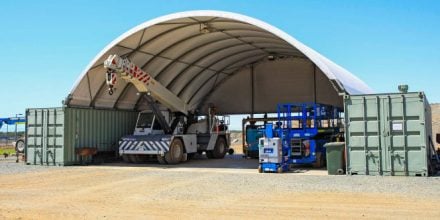

When designing a Fabric DomeShelter™ Structure, the frame type plays a critical role in determining strength, suitability, cost, and installation time. DomeShelter™ Structures offer two main options: Truss and Single Hoop.
Both are highly durable, fully engineered solutions. This article outlines the differences and helps guide the decision on which suits your project best.
What’s the Difference?
Truss
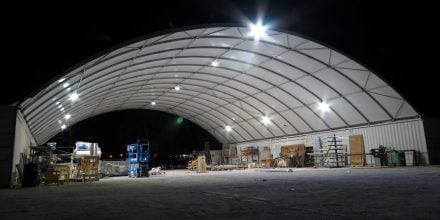
A Truss frame consists of multiple interconnected steel members, top chords, bottom chords, and webs, arranged in a triangular formation. This design maximises structural efficiency by distributing loads through compression and tension across multiple paths. 
Structural benefits:
- Superior load distribution: The triangulated design spreads stress across the structure, allowing it to resist deflection and deformation over large spans.
- Greater design flexibility: Trusses can be adapted to suit a wide range of engineering parameters, including custom loading, extreme environments, and irregular site footprints.
- Resilience to dynamic forces: More joints and load paths mean trusses handle fluctuating wind loads, vibrations, and movement more effectively—especially with pinned connections.
- Portal action capability: Unlike single hoops, Truss frames allow for pinned foundations, which can significantly reduce the amount of concrete required and make them suitable for sites with limited groundworks.
Best suited for:
- Large spans (generally 20m+)
- High-wind or cyclone regions
- Projects where load-bearing efficiency and foundation costs are key factors
Single Hoop
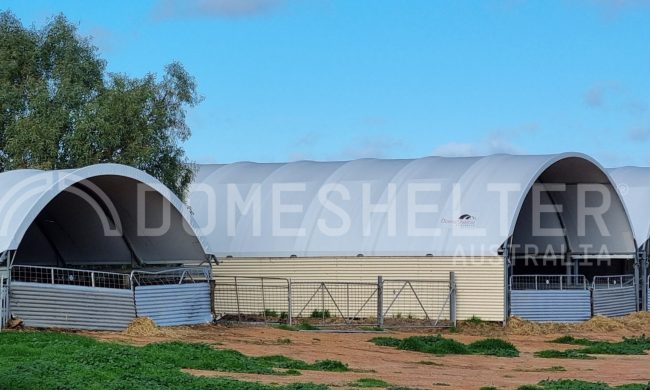
A Single Hoop frame uses curved steel beams (or “hoops”) spaced at regular intervals along the length of the shelter. These beams are fabricated from high-tensile steel and are engineered to withstand expected reasonable wind and load conditions. The simplicity of the design means fewer components, faster manufacturing, and minimal complexity for installation on-site. 
Structural benefits:
- Streamlined design: Fewer steel members and joints reduce complexity and points of potential wear.
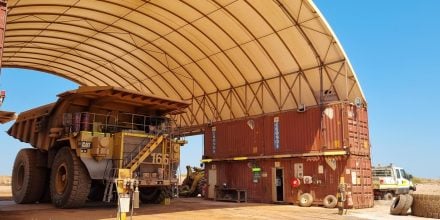
- Lightweight framework: Ideal for container-mounted shelters and situations where weight must be minimised.
- Quick to produce and assemble: Minimal fabrication and bolting requirements allow for faster lead times and easier deployment.
Best suited for:
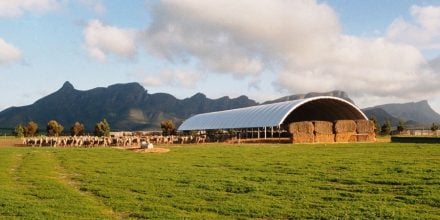
- Small to mid-sized shelters
- Projects with smaller budgets or simpler site requirements
- Regions with lower wind loading or structural complexity
Both systems are engineered for strength. The difference is how and where that strength is best applied.
Comparison: Truss vs Single Hoop
Truss Frame | Single Hoop Frame | |
| Span Capability | Engineered for spans 20m and above | Best for spans under 20m |
| Load Management | Optimised for high wind zones, heavy loading, and dynamic forces | Handles moderate wind and roof loads effectively |
| Foundation Requirements | Allows for pinned connections, reducing foundation size and cost | Requires fixed base plates, typically more concrete |
| Installation | Modular and efficient for large-scale installs, fewer total sections | Fewer components, faster for small builds |
| Weight & Transport | Heavier but packs efficiently due to modular sections | Lighter frame |
| Design Flexibility | Suits custom layouts, larger footprints, and high-spec sites | Best for standard layouts and low-complexity builds |
| Ideal Applications | Bulk storage, warehousing, cyclone-rated sites, high-clearance shelters | Small workshops, equipment storage, shade shelters |
What About Cost?
It’s not quite as simple as “Truss is more expensive.” While Truss frames often have a higher upfront cost, they can save money overall on large-scale projects—especially where reduced concrete footings, faster installation, or more extreme conditions come into play.
Our team doesn’t recommend Truss over Single Hoop lightly—it’s always based on our engineer’s project analysis. If a Single Hoop does the job well, that’s what we’ll suggest. If the project demands something a little more robust, long-term value is better with Truss, we’ll show you why.
Still unsure which frame type suits your project?
Our team can help you match your shelter to your site conditions, use case, and future needs.
Contact our team today or head to our learning centre to find out more about our DomeShelter™ Solutions.