

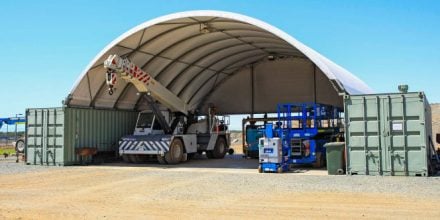

Each year as October and November roll around, businesses in Northern Australia turn their attention to cyclone season. Mining and industrial sites in regions like WA, QLD, and NT know the risks all too well: strong winds, torrential rain, and days of operational disruption. The cost of being unprepared is measured not just in lost productivity, but in real risks to safety and infrastructure. That’s why cyclone-rated infrastructure is more than a box-ticking exercise — it’s a critical safeguard for people, assets, and operations.
Understanding Extreme Weather
So what actually qualifies as an “extreme weather event”? In Australia, the term generally applies to severe thunderstorms, cyclones in tropical regions, deep low-pressure systems, and even tornadoes. Meteorologists classify conditions as “extreme” when winds exceed 90 km/h.
Australia is divided into Wind Regions A–D, each with defined speeds under the Wind Code of Australia (AS1170.2, and representing increasing levels of cyclone and storm risk:
- Region A – Normal: Up to 155 km/h
- Region B – Intermediate: Up to 188 km/h
- Region C – Cyclonic: Up to 220 km/h
- Region D – Severe Cyclonic: Up to 260 km/h

DomeShelter Australia’s Wind Regions Map
DSA’s engineering process ensures our structures are designed and certified for the specific risks of their location, from southern Australia through to cyclone-prone northern regions.
Engineering for Cyclone Protection
DomeShelter™ Structures are purpose-built to withstand Australia’s most extreme weather conditions. Every structure is engineered for the wind loading prescribed by AS1170.2 – Wind Actions, the national standard that defines wind forces on structures. Each shelter is capable of meeting the wind loads specific to its location and provides peace of mind that the shelter is fit-for-purpose.
Compliance goes beyond the wind code. DomeShelter Australia operates under ISO 9001 (Quality Management) and ISO 45001 (Occupational Health & Safety) certifications. These frameworks underpin consistency, reliability, and safety across all products and processes. Combined, they ensure that every DomeShelter™ delivered, whether for a remote mine site or a coastal port, is built to rigorous international standards.
Practical Preparedness for Sites
Engineering compliance is the foundation, but ongoing preparedness is equally important for maximising the life and performance of a DomeShelter™ Structure. This is where our DomeShelter™ Site Inspections & Reporting Service provide added assurance.
Our experienced team conducts both desktop and on-site inspections, delivering detailed reports and prioritised action items. These inspections and reports go beyond routine checks, helping operators verify compliance with engineering certifications, identify early signs of wear, and ensure shelters remain safe, compliant, and cyclone-ready for the season ahead.
Read more: DomeShelter™ Inspections & Reporting And Preparing For Cyclone Season
Mining and industrial operators are encouraged to take a proactive approach to inspections and maintenance, particularly as cyclone season approaches.
Contact our sales team to organise a DomeShelter™ Inspection & Reporting Service for your shelters today.
Proven Performance in the Field
Real-world results provide the strongest evidence of resilience. DomeShelter™ Structures have been deployed across Australia’s most challenging environments — from the cyclone-prone Pilbara to the harsh coastal conditions of WA ports. Each project demonstrates how engineered design translates into long-term reliability.
Read about:
These examples illustrate more than compliance — they showcase trust. Mining companies return to DomeShelter Australia for new projects because the shelters continue to meet and exceed expectations in real-world conditions.

Enhancing Cyclone Protection with Add-Ons
Beyond core engineering, DomeShelter™ Solutions offer optional features that further strengthen cyclone readiness and support safer operations during extreme weather events.
- Custom Guttering Systems: Designed to channel heavy rainfall away from entrances and equipment, these systems reduce the risk of flooding and water damage. Effective drainage is critical during cyclonic downpours, where rainfall can be both intense and sustained. Read more: Can I Add Gutters to a Fabric Shelter? DomeShelter™ Water Management
- Tropical Roof Systems: An additional roof layer that creates an insulating air gap, reducing internal heat build-up while improving overall structural resilience. Particularly valuable in Northern Australia where high humidity and heat combine with severe weather.
- Lightning Protection Kits: Reduce risk during storms by managing lightning currents and ground potential. DomeShelter™ integrates proven systems like earth rings, rods, and surge protection, creating safer spaces during lightning events.
Read more: Are Fabric Shelters Effective In Lightning
Together, these add-ons complement the structural engineering of DomeShelter™ Solutions, offering a tailored approach to cyclone preparedness that meets both environmental demands and operational requirements.
When the next cyclone season hits, will your site be ready?
DomeShelter™ Solutions provide certified, cyclone-rated protection for mining and industrial operations, backed by audits, inspections, and proven add-ons that safeguard people, assets, and uptime.
Now is the time to act, not after the damage is done.